
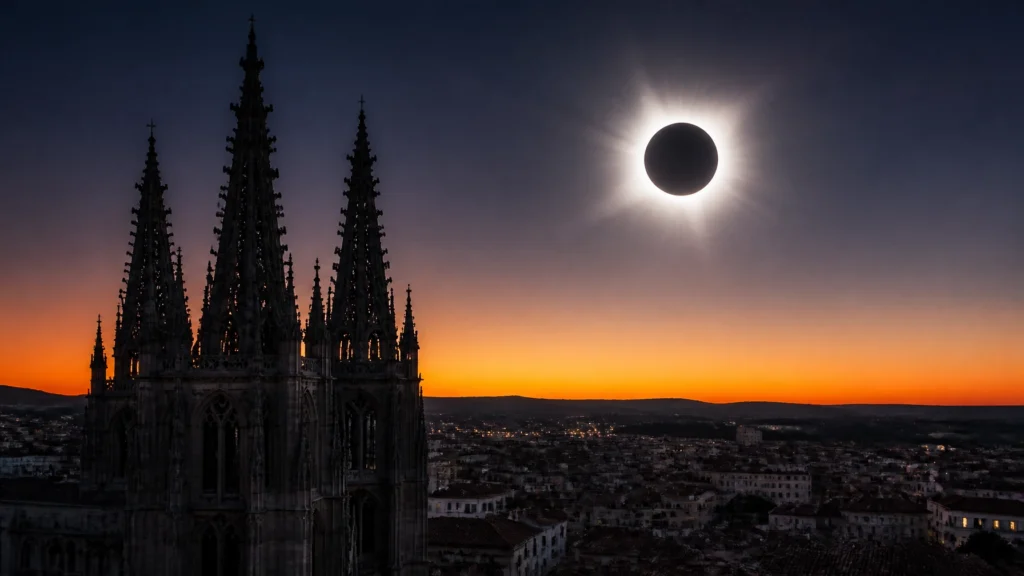
The countdown has officially begun. In exactly twenty six days, the sky over northern Spain will go dark in the middle of the afternoon. This is not just another celestial event. It is a once in a lifetime opportunity to witness a total solar eclipse in one of the most beautiful countries in the world. On August 12, 2026, the moon will completely block the sun, casting a shadow that will sweep across the Spanish landscape.
If you are reading this, you are likely already thinking about catching this rare moment. Whether you are a seasoned traveler or someone looking for a unique summer adventure, timing is everything. Spain is about to become the center of the universe for astronomy fans and vacation seekers alike. But before you grab your passport and head for the airport, there are a few critical things you need to know to make sure you actually see the event.
1. This is the first total eclipse in Spain for 121 years
The last time Spain saw a total solar eclipse was back in 1905. That is over a century of waiting for this specific alignment of the sun, moon, and earth. For many people living today, this will be the only chance they ever have to see totality without leaving the country. Because it has been so long, the local excitement is reaching a fever pitch.
This historical gap means that Spain is not just hosting a show; they are making history. Local festivals and viewing parties are popping up in small villages and large cities alike. When you stand in the shadow of the moon on August 12, you are participating in an event that has not happened since the days before commercial flight was common. It is a powerful reminder of how rare these moments truly are.
2. The path of totality is surprisingly narrow
When people hear about an eclipse, they often think they can see it from anywhere nearby. That is a common mistake. The path of totality, which is the only area where the sun is completely covered, is only about one hundred miles wide. If you are even a few miles outside of this path, you will only see a partial eclipse.
A partial eclipse is interesting, but it is nothing like the experience of totality. During totality, the temperature drops, the birds go silent, and the stars come out in the middle of the day. You must be inside that narrow strip to see the glowing corona of the sun. Make sure you check a precise map before you choose your hotel. Being ninety nine percent of the way there is not enough to get the full effect.
3. Madrid and Barcelona are not in the path
This is perhaps the most important tip for international travelers. Spain's two most famous cities, Madrid and Barcelona, are both outside the path of totality. If you stay in your hotel in Barcelona, you will see a very deep partial eclipse, but you will miss the main event.
You need to head north to find the shadow. Many people are making the mistake of booking stays in these major hubs thinking they can just look up and see it. While you can certainly start your trip in these cities to enjoy the food and culture, you will need to plan a day trip or a move further north by August 12. If you want more tips on navigating major European cities, check out our thoughts on why everyone is talking about Slovenia for similar crowd dodging strategies.

4. The best cities for viewing are Burgos, A Coruña, and Zaragoza
Since you have to head north, you should pick your home base wisely. Three cities stand out as the best options for different reasons. Burgos is widely considered the top choice because it sits right in the center of the path and usually has very clear inland skies. It is a stunning city with a famous cathedral that provides a perfect backdrop for photos.
A Coruña is a great pick if you want a coastal experience. It offers dramatic views of the Atlantic Ocean, though the weather can be a bit more unpredictable near the water. Zaragoza is another excellent choice because it has great infrastructure and is easy to reach from other parts of the country. Each of these cities is preparing for a massive influx of visitors, so pick the vibe that fits your travel style best.
5. The sun will be very low in the sky
This eclipse is happening late in the day, shortly before sunset. This means the sun will only be between four and twelve degrees above the horizon. While this creates a beautiful effect with orange and purple light, it also presents a challenge.
If there is a building, a mountain, or even a tall tree in your way to the west north west, you will miss the eclipse entirely. You cannot just stand in a narrow street in an old Spanish town and expect to see it. You need to find an open field, a high hill, or a west facing beach. Scouting your location the day before at the exact time of the eclipse is the smartest move you can make.
6. You must book your accommodation right now
We are less than a month away, and smaller cities like Burgos are filling up fast. Travelers from all over Europe and the United States are descending on northern Spain for this event. If you wait another week, you might find yourself sleeping in your car or staying two hours away from the path.
If you find that hotels are sold out, look for smaller guest houses or even campsites in the surrounding countryside. Many locals are opening up their homes for the week of the eclipse. If you need help finding the best value for your stay, our ultimate guide to all inclusive vacations has great tips on how to find deals even during peak travel seasons.
7. Use an inland weather strategy for the best odds
Weather is the one thing no one can control. In northern Spain, the coast is beautiful but often cloudy. If a thick fog rolls in from the ocean, your eclipse view is gone. This is why many veteran eclipse chasers are heading inland to regions like Castile and León.
The inland plains around Burgos and Palencia tend to have much drier air and clearer skies in August. If the forecast looks cloudy on the coast, be prepared to drive inland. Having a rental car and staying mobile is the best way to ensure you actually see the sun. Just like exploring the Great Smoky Mountains, having a plan for different weather conditions makes for a much better trip.

8. You need proper eclipse glasses
You can never look directly at the sun without protection, except during the few minutes of total darkness. Standard sunglasses will not protect your eyes. You need certified solar eclipse glasses that meet international safety standards.
Do not wait until you get to Spain to buy them. They will likely be sold out or sold at a massive markup at tourist stands. Buy a pack now and pack them in your carry on bag. Make sure they do not have any scratches or holes before you use them. Safety is the most important part of enjoying this event.
9. Traffic will be heavy on August 12
Imagine thousands of people all trying to drive to the same hundred mile wide strip of land at the same time. The highways in northern Spain are good, but they are not built for this kind of volume. Expect major delays on the day of the eclipse.
Plan to arrive at your viewing spot early in the morning and stay late into the evening. Pack plenty of water, snacks, and sunblock in your car. Many people will be pulled over on the side of the road, which can make driving dangerous. Find a safe parking spot well before the moon starts to move across the sun.
10. Turn it into a full Spain vacation
While the eclipse only lasts for a few minutes, you are in one of the most culturally rich regions of Europe. Don't just fly in and fly out. Spend time exploring the local food scene, visiting ancient castles, and enjoying the beaches of the north.
Northern Spain is famous for its pintxos, cider, and lush green landscapes that look very different from the dry south. You could even combine this trip with a visit to some of the best Florida beach towns later in the year if you want to keep the summer vibes going. Make the most of your travel investment by soaking in every bit of Spanish culture while you wait for the sky to turn dark.
The 2026 Spain solar eclipse is going to be a landmark event. With a little bit of planning and these ten tips, you can ensure that your experience is seamless and spectacular. We will see you in the shadow!