You know that feeling. You’ve been home from vacation for two days, but you’re more exhausted than when you left. Your camera roll is full of three hundred photos of monuments you barely remember standing in front of, your feet are covered in blisters from "seeing it all," and your brain is already buzzing with the stress of the 9-to-5 you were supposed to be escaping.
We’ve been conditioned to believe that travel is a race. We treat our itineraries like grocery lists, checking off "Eiffel Tower" or "Colosseum" as if we’re stocking up for a storm. But in the rush to see everything, we often end up feeling… nothing. We miss the way the light hits the cobblestones at 6:00 AM. We miss the smell of the local bakery’s first batch of focaccia. We miss the chance to actually breathe.
What if your next trip wasn't about the where, but about the how? Welcome to the world of slow travel: a philosophy that’s becoming the ultimate luxury in 2026 for those of us who are simply tired of the hustle.
The Art of Doing Less: A New Way to Wander
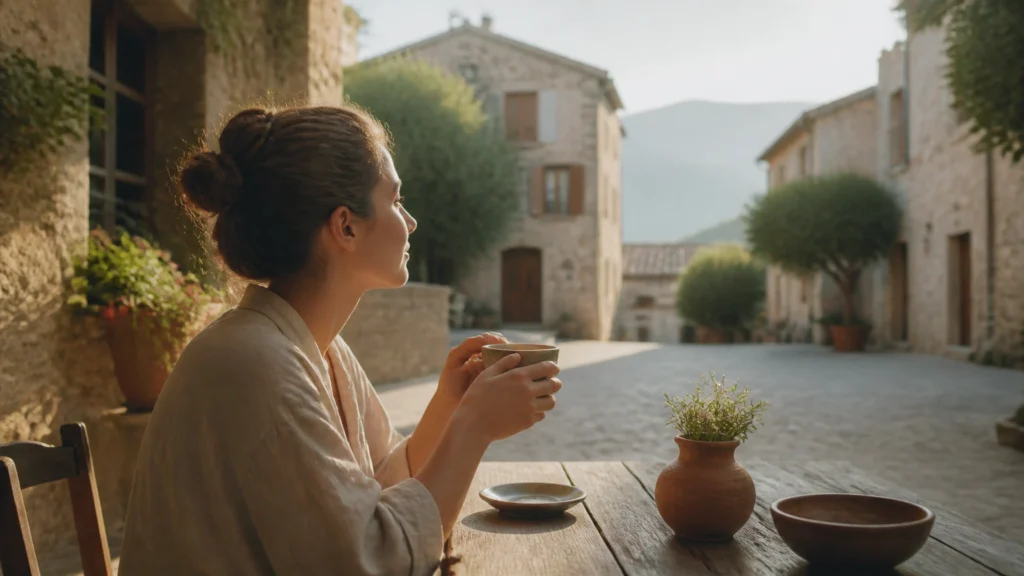
The slow travel movement isn’t just a trend; it’s a rebellion. It’s a quiet "no" to the frantic, multi-city tours and a loud "yes" to staying put. Imagine waking up in a small village in the heart of Portugal or a quiet neighborhood in Kyoto. You don’t have an alarm set. There’s no tour bus waiting at the curb. Instead, your only plan for the morning is to walk to the corner café, the one where the owner is starting to recognize your face, and watch the world go by.
Slow travel is about intention. It’s the choice to spend seven days in one neighborhood rather than seven days in three different countries. When you choose a single hub, the pressure to "see it all" evaporates. You aren't a tourist anymore; you’re a temporary local. You start to notice the rhythm of the place: the way the old men gather on the benches in the afternoon, or the specific blue of the shutters on the house three doors down.

This depth of experience is where the real magic happens. It’s the difference between seeing a destination and actually feeling it. When we slow down, we give our minds the space they desperately need to reset. We trade the dopamine hit of a "like" on social media for the deep, soul-level satisfaction of a quiet moment.
Practical Steps for Your 2026 Slow Travel Escape
If you’re ready to trade the checklist for a deeper connection, here is how you can practically design a slow travel experience in 2026.
1. Choose a Single Hub
The golden rule of slow travel is the "one base" rule. For a week-long trip, pick one city or town and stay there the entire time. If you’re traveling for two weeks, maybe choose two. By staying in one place, you save hours: even days: of travel time between airports and train stations. You can still explore nearby areas with day trips, but you’ll always return to a "home" that feels familiar.
2. Rent a Home, Not a Hotel Room
To truly immerse yourself, look for residential stays. Renting an apartment in a local neighborhood allows you to visit the neighborhood market, cook a simple meal with local ingredients, and see what life actually looks like for the people who live there. It’s about finding a place where the sounds of the street are more prominent than the sounds of the hotel lobby.

3. Embrace the "Sleeper" Renaissance
In 2026, we’re seeing a massive return to train travel, specifically sleeper trains. Instead of a frantic one-hour flight that requires three hours of security lines, take the train. The journey becomes the destination. There is something incredibly therapeutic about watching the landscape transform through a window while you sip tea or read a book. It’s a transition period that prepares your mind for the destination.
4. Leave 50% of Your Schedule Blank
This is the hardest part for many of us. We feel like if we aren't "doing," we’re wasting money. In reality, the "unplanned" time is where the best memories are made. It’s the afternoon you decided to follow a cat down a narrow alley and found a hidden garden. It’s the three-hour lunch that turned into a conversation with the restaurant owner. Give yourself permission to be bored. Boredom is often the doorway to wonder.
5. Seek Out "Cool-cations"
As major cities become more crowded and warmer, 2026 is the year of the "cool-cation." Look toward the mountains, the northern coasts, or smaller, less-frequented towns. Places like the quiet corners of Iceland or the alpine meadows of Switzerland offer the kind of physical and mental space that’s hard to find in a bustling metropolis.
Planning this kind of intentional trip can feel a little overwhelming if you’re used to the standard "vacation package" model. This is where having a travel agent can be a game-changer. Instead of just booking a flight, they help curate a pace. They can find those tucked-away villas, recommend the best regional train routes, and ensure your logistics are so seamless that you don’t have to think about them: you just have to be.
The Emotional ROI: Why Your Soul Needs This
We live in a world that demands our attention 24/7. Between work emails, family responsibilities, and the endless scroll of the internet, our nervous systems are often in a state of low-level "fight or flight." Slow travel is the antidote.
When you remove the pressure of the itinerary, your brain finally gets the memo that it’s okay to relax. You start to notice your own thoughts again. You reconnect with your partner or your family in a way that isn't possible when you're rushing to catch the next tour. You’re building memories that have weight and texture, rather than just digital footprints.

Think back to your favorite travel memory. Was it the time you spent four hours in a museum line? Or was it the evening you sat on a balcony overlooking a quiet vineyard, drinking a local wine and listening to the cicadas, feeling like for the first time in years, you finally had nowhere else to be?
Slow travel is about reclaiming your time. It’s about realizing that life isn't a race to the finish line, and neither is your vacation. It’s about the freedom to choose peace over prestige.
Where Will You Find Your Peace?
The world is huge, and our time is short. But the answer isn't to try to see more of it: it’s to see it more deeply. Whether it’s a weekend escape or a month-long sabbatical, try stripping back the "must-dos" and replacing them with "want-to-feels."
Imagine a trip where you return home feeling truly restored, with stories that involve people and feelings rather than just landmarks. That’s the promise of slow travel. It’s a gift you give to yourself: a chance to remember what it feels like to just be.

Are you ready to stop traveling like you're working and start traveling like you're living? Your next great experience is waiting: not at the top of a crowded monument, but in the quiet spaces in between.