
Written by Dre Hardy
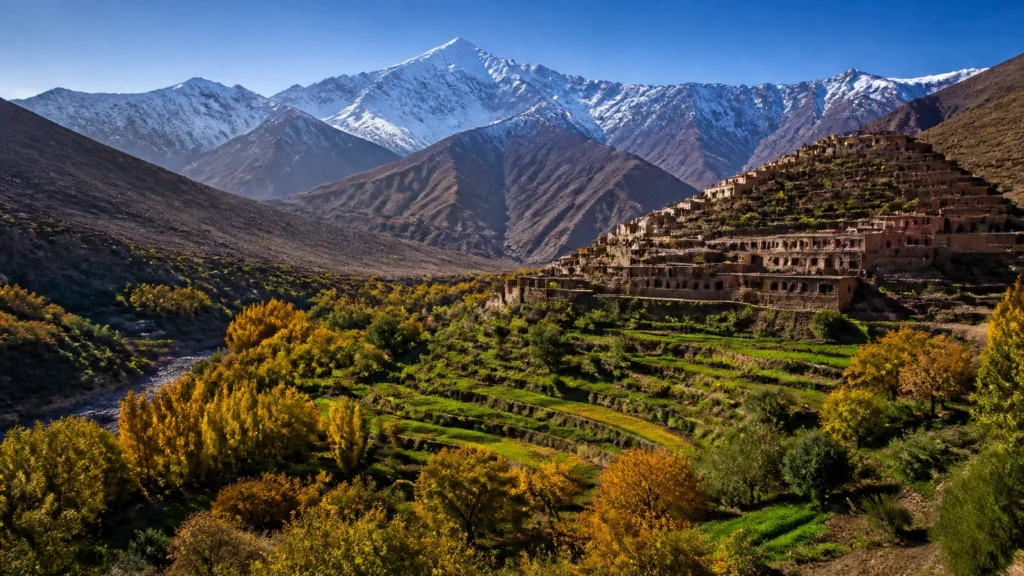
When most travelers picture Morocco, they imagine the bustling souks of Marrakech, the vibrant blue alleys of Chefchaouen, or camel treks across the golden dunes of the Sahara. Yet just a short drive south of the Red City, a completely different world awaits. The High Atlas Mountains rise dramatically from the plains, offering crisp mountain air, towering peaks, and centuries-old Berber culture that feels entirely untouched by modern time.
If you have been searching for a shoulder-season adventure that trades suffocating summer heat and tour bus crowds for golden sunlight and tranquil trails, autumn is your golden ticket. From September through October, the Atlas Mountains transform into a hiker's paradise. Daytime temperatures linger in the comfortable 60s and 70s Fahrenheit, the valleys are lush with harvest greens and ripening walnuts, and the legendary hospitality of the local Berber people shines brighter than ever.
Why Fall Is the Magic Window for Atlas Trekking
Timing your mountain escape correctly makes all the difference. Summer in the High Atlas can bring punishing midday sun, while winter introduces sub-freezing temperatures and heavy snow to the higher elevations. Autumn, however, hits the sweet spot.
September starts off warm and vibrant, echoing the tail end of summer while shedding the August tourist rush. By October, the weather settles into crisp, stable blue skies with daytime temperatures around 55°F to 65°F in mountain villages like Imlil. Nights can get chilly, dropping into the 30s or 40s, but that simply makes a warm mint tea by the hearth feel like pure luxury.
Moreover, this is the time of the walnut and apple harvest. Walking along terraced hillsides, you will hear the rustle of leaves and see local farmers gathering crops by hand, creating a rich cultural backdrop you will not experience during any other season. For outdoor lovers looking for inspiration, our guide on active outdoor hubs highlights how shoulder-season travel redefines the active getaway.
Basecamp Imlil: Gateway to Mount Toubkal
Your mountain journey almost certainly begins in Imlil, a charming alpine village nestled at the foot of Mount Toubkal, North Africa’s highest peak at 4,167 meters (13,671 feet). Located just 90 minutes from Marrakech, Imlil serves as the ultimate basecamp for both casual day-hikers and serious mountaineers.

Even if you have no ambition to summit Toubkal, Imlil offers stunning day walks. You can hike up to the pilgrimage shrine of Sidi Chamarouch, winding past cascading waterfalls and mule tracks, or take a ridge trail that overlooks terraced barley fields and traditional mud-brick houses clinging to sheer cliffs.
The village itself is welcoming, filled with guesthouses run by local Berber families. Staying in a family-run mountain lodge is one of the true highlights of the Atlas experience. You will be treated to hearty tagines slow-cooked with seasonal vegetables, freshly baked flatbreads, and endless pots of sweet Moroccan mint tea served with genuine warmth.
Conquering Mount Toubkal in Autumn
For travelers seeking a true bucket-list challenge, autumn is arguably the finest time to tackle Mount Toubkal. Because the summer snow has completely melted and winter storms have not yet arrived, the standard trekking route is largely free of technical snow and ice through September and early October.
The trek typically spans two days. Day one involves a steady, scenic 5-to-6-hour ascent from Imlil up to the Netto Toubkal Refuge (approx. 3,200 meters), passing mountain streams and dramatic rock amphitheatres. Day two begins well before dawn. You will scramble up scree slopes under a canopy of brilliant stars, reaching the summit just as the sun crests the horizon, casting a massive triangular shadow of the mountain across the distant desert floor.
While technical gear like crampons is rarely needed until late October, you should still pack serious layers. Temperatures at the summit in autumn can hover around freezing, and proper hiking boots, trekking poles, and a warm sleeping bag are essential for comfort and safety. If you enjoy planning epic outdoor adventures, check out our simple hiking hacks for more trail-smart tips.
Stepping Back in Time at Aït Benhaddou
No fall road trip through the Atlas region is complete without crossing the Tichka Pass to explore the legendary Ksar of Aït Benhaddou. Perched dramatically along the former caravan route between the Sahara and Marrakech, this ancient earthen clay village is a UNESCO World Heritage site and a masterpiece of southern Moroccan architecture.

Autumn brings gorgeous golden-hour lighting to the desert transition zone where Aït Benhaddou sits. With daytime temperatures hovering in the pleasant 70s and low 80s, exploring the labyrinth of narrow alleys, defensive towers, and sun-baked mud walls is wonderfully comfortable compared to the sweltering heat of July or August.
Walking across the stepping stones of the Ounila River to enter the kasbah feels like walking onto a Hollywood movie set: which makes sense, given that epics like Gladiator and Lawrence of Arabia were filmed here. Take a few hours to wander upward to the old granary at the top for panoramic views over the river valley and the surrounding desert foothills.
Day Trips and Extended Itineraries from Marrakech
If you are short on time, the Atlas Mountains make for an effortless escape from the kinetic energy of Marrakech. You can easily book a guided day trip into the Ourika Valley or the Three Valleys region, where you will visit traditional weekly markets, stop at cooperative women's argan oil workshops, and enjoy lunch beside rushing mountain streams.
However, if your schedule allows, spending four to five days exploring the loop from Marrakech through Imlil, over the High Atlas via the Tichka Pass, down to Aït Benhaddou, and back through Ouarzazate offers the ultimate Moroccan road trip. It combines alpine majesty, rich Berber culture, and ancient history in one seamless journey.
For more inspiration on structuring incredible getaways and finding the best value across global destinations, browse our comprehensive travel resources and guides.
Practical Tips for Your Atlas Mountain Adventure
- Pack in Layers: Mountain weather is notoriously changeable. Pack moisture-wicking base layers, a cozy fleece or down jacket, a windproof outer shell, and sturdy broken-in hiking boots.
- Respect Local Culture: The Atlas Mountains are home to traditional Berber communities. Dress modestly, always ask permission before taking photographs of locals, and consider hiring a local mountain guide to support the regional economy.
- Stay Hydrated and Nourished: Drink bottled or purified water, and take advantage of fresh local oranges, figs, and nuts sold along the trails.
- Book Ahead for Guesthouses: While fall is less crowded than spring or autumn peak weeks, popular family-run lodges in Imlil fill up fast during weekend harvest periods.
The Atlas Mountains in autumn offer an unforgettable blend of physical adventure and deep cultural connection. Lace up your boots, breathe in the crisp mountain air, and discover the tranquil, breathtaking side of Morocco that few tourists ever get to see.
https://traveltribeescapes.com/the-ultimate-guide-to-all-inclusive-vacations-everything-you-need-to-know-to-score-the-best-value