
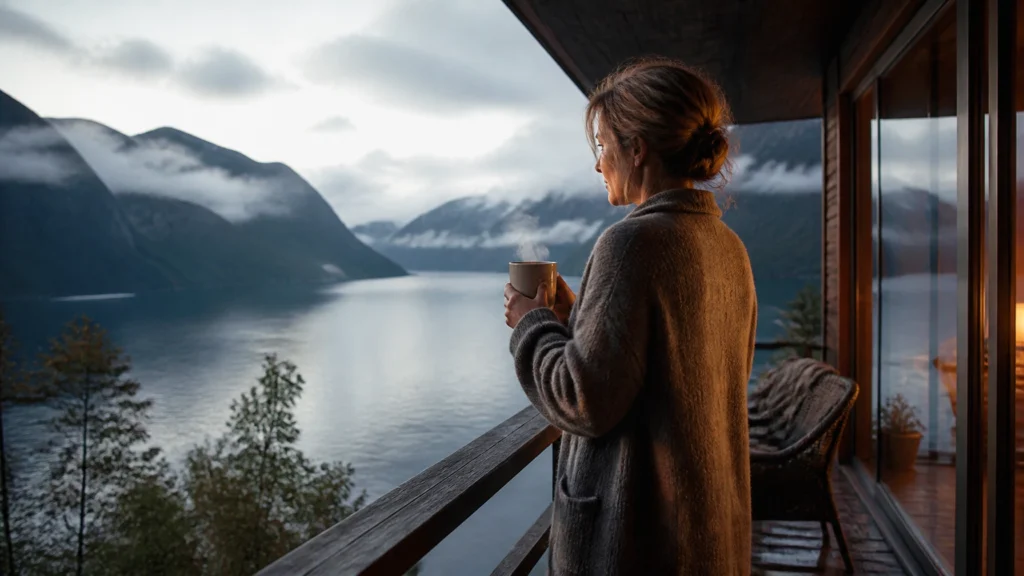
There is a specific kind of exhaustion that comes with the height of July. It’s not just the physical heat: the way the pavement radiates warmth long after the sun goes down: it’s the mental noise. The crowded beaches, the long lines for lukewarm gelato, and the frantic pace of trying to "relax" while everyone else is doing the exact same thing. Maybe you’ve felt it too. You scroll through photos of Mediterranean summers, but all you see is sweat and stress. You find yourself dreaming of something else. Something quiet. Something crisp.
You’re dreaming of a "coolcation."
In 2026, the trend is shifting. Hardworking adults who spent the year giving everything to their jobs and families are realizing that they don’t need more heat: they need a reset. They are trading the humidity of the south for the mist-covered peaks of the north. They are choosing the deep, restorative greens of Norway and the rugged, salt-sprayed cliffs of Ireland. This isn't just about escaping a heatwave; it’s about reclaiming your peace in a place where the air actually feels like it’s waking you up.
The Mirror of the Fjords: Finding Stillness in Norway
Norway isn't a place you visit to check off a list. It’s a place you visit to breathe. Imagine standing at the edge of the Geirangerfjord, where the water is so still it looks like a sheet of dark glass reflecting the sky. There’s no thumping bass from a beach club here. Instead, there’s the distant roar of a waterfall: one of the "Seven Sisters": cascading down a sheer granite cliff.
The beauty of a Norwegian summer is the light. Because of the midnight sun, the days feel endless, but not in a draining way. The light stays soft, golden, and ethereal well into the evening. It gives you permission to move slowly. You can spend an entire morning in a small village like Flåm, simply watching the morning mist lift off the water while you sit on a pier with a coffee.
Norway is the ultimate destination for slow travel, where the goal is to experience the landscape rather than just pass through it. Whether you are taking the scenic Flåm Railway or kayaking through the Nærøyfjord, the scale of the nature around you has a way of making your everyday worries feel small and manageable.

The Wild Atlantic Way: Ireland’s Answer to the Soul’s Restless Search
If Norway is about stillness, Ireland’s Wild Atlantic Way is about connection. Stretching 1,500 miles along the rugged west coast, this route is a masterpiece of nature’s raw power and the warmth of human spirit.
When you drive (or better yet, walk parts of) the Wild Atlantic Way, you aren't just looking at scenery; you’re entering a story. One day you’re standing atop the Cliffs of Moher, feeling the spray of the Atlantic on your face, and the next you’re tucked into a cozy pub in Donegal, listening to a local fiddle player while a peat fire crackles in the corner.
The temperature here in the summer is perfection: rarely too hot, often breezy, and always fresh. It’s the kind of weather that invites you to put on a light sweater and walk for miles along a coastal path without seeing another soul. It’s a mental reset that doesn't require a tropical sun.
However, planning a trip that covers the best hidden gems of the West Coast or the secret inlets of the Fjords can be a logistical puzzle. This is where the magic of a travel agent comes in. In an age of automated booking engines, having a real human: a travel curator: makes the difference between a "good" trip and a life-changing experience. They know which boutique lodges have the best views of the Atlantic and how to time your visit to the fjords to avoid the cruise ship crowds. They handle the complex itineraries so that your only job is to show up and exhale.

Why Your Mind Craves the "Cool"
There is a psychological benefit to these cooler, nature-heavy destinations that goes beyond just avoiding a sunburn. Scientists and wellness experts often talk about "blue spaces": being near water: and how it lowers cortisol levels. When you combine that with the "green space" of Ireland’s rolling hills or Norway’s forest-lined mountains, you’re essentially giving your nervous system a spa day.
Slow travel in these regions allows for something we rarely get in our 9-to-5 lives: reflection. When you aren't rushing to the next museum or fighting for a spot on a crowded beach, you have the space to think. You start to remember who you are when you aren't "on." You notice the way the light changes on the heather-covered hills or the sound of the wind through the pines.
These destinations are about experience-driven travel. They aren't about luxury flexing or flashy resort photos. They are about the luxury of time, the luxury of silence, and the luxury of feeling truly, deeply alive in a world that often feels too small.

Is It Time to Change Your Horizon?
As we look toward the peak of the 2026 travel season, the question isn't just "where do you want to go?" but "how do you want to feel when you get back?"
If you’re tired of the same old summer routine and the same old heat, perhaps it’s time to head north. There is a whole world of mist, mountains, and emerald coastlines waiting to welcome you. Whether it’s the dramatic silence of a fjord or the wild, untamed beauty of the Irish coast, the "cool" is calling.
Can you hear it?