
You know that feeling. You’ve spent months staring at a fluorescent light in your office, dreaming of a getaway. You’ve saved your PTO like it’s gold, and you finally land in a city you’ve seen a thousand times on Instagram. But as you step out of the taxi, you aren’t greeted by the "soul-stirring magic" the brochures promised. Instead, you’re met with a wall of selfie sticks, a guy trying to shove a plastic glowing helicopter into your hand, and a restaurant menu with photos of frozen pizza translated into twelve different languages.
Suddenly, the "escape" feels like just another crowded commute, only with more humidity and overpriced gelato.
We’ve all been there. The "tourist trap" is the ultimate dream-killer. It’s loud, it’s expensive, and it leaves you feeling more exhausted than when you left your 9-to-5. But here’s the secret: the real magic: the quiet, authentic, heart-resetting moments: is still there. It’s just hiding three blocks over, tucked behind a laundry line or down a staircase that doesn't look like it leads anywhere important. Finding it doesn’t take a secret society membership; it just takes a shift in how you look at the world.
The Magic of the "Un-Planned" Moment
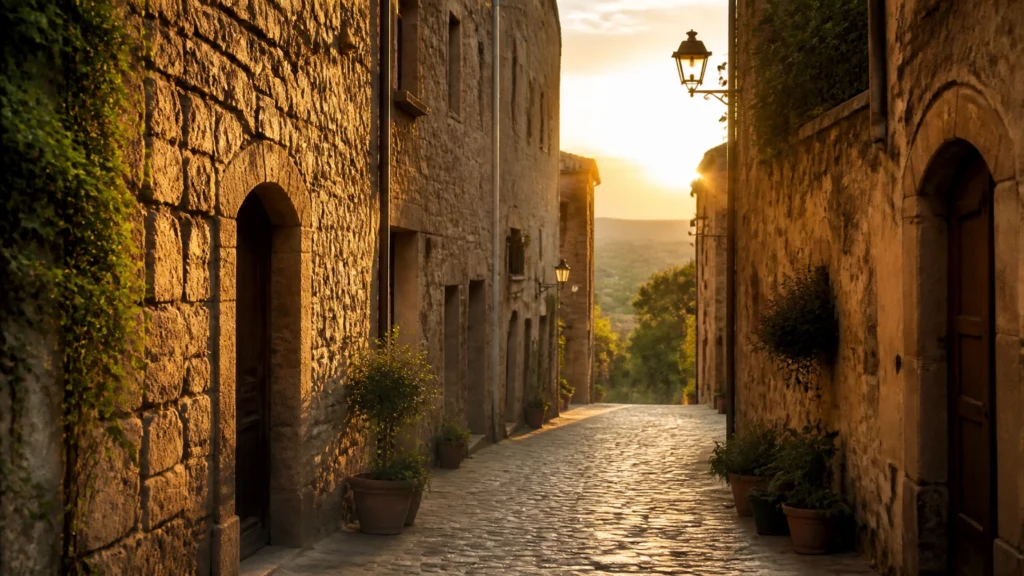
Imagine this instead: It’s 7:30 AM in a small town on the coast of Portugal or a quiet neighborhood in Kyoto. The air is cool, and the only sound is the rhythmic clack-clack of a shopkeeper opening their shutters. You aren’t rushing to beat a three-hour line for a cathedral. Instead, you’re following the scent of fresh bread to a bakery that doesn't even have a sign. You sit on a stone wall, eating a warm pastry, watching the town wake up.
No one is trying to sell you anything. No one is shouting. For the first time in months, your brain actually feels… quiet. This is what we call a "Hidden Gem" experience. It’s not about finding a place that’s never been visited; it’s about finding a place that hasn't been commodified.
When you find these spots, you aren’t just a spectator; you’re part of the scenery. Whether it's a slow-paced morning in Paris or a secluded beach where the only footprints are your own, these are the moments that actually recharge your battery. They remind you that life isn't just about the "to-do" list; it's about the "to-be" list.

How to Outsmart the Tourist Trap: Practical Insights
Finding these gems isn't just luck; it's a strategy. If you want to avoid the traps and find the soul of a place, you have to be willing to look where the crowd isn't pointing. Here is how you can practically apply the 'Dream, Decide, Plan, Act' framework to your next escape:
1. The "Three-Block Rule"
This is the simplest and most effective rule in travel. In almost any city in the world, the tourist traps congregate within a two-block radius of the major monuments. If you see the Eiffel Tower or the Colosseum, walk ten minutes in any direction away from it. By the time you reach the third or fourth block, the prices will drop by 40%, the menus will lose the pictures, and the people sitting at the tables will be locals, not fellow travelers. This is where you find authentic local eats that you'll actually remember.
2. Decode the "Tourist Menu" Red Flags
We’ve all seen them: the "Tourist Special" or "Menu Fisso." If a restaurant has someone standing outside trying to lure you in, walk away. If the menu is translated into five languages and features "international" staples like chicken nuggets or spaghetti bolognese in a country that doesn't speak Italian, it’s a trap. Real gems don't need to beg for your attention. They rely on word-of-mouth and the quality of their ingredients. Look for hand-written chalkboards or menus that change daily based on what was at the market that morning.

3. Use Maps Like a Local
Stop searching for "Best restaurants in [City Name]" on Google. That’s how you find the places that have the best SEO, not the best food. Instead, zoom into a residential neighborhood on your map and look for places with high ratings but very few reviews in your native language. If you see 4.8 stars and all the reviews are in the local tongue, you’ve hit the jackpot.
4. Talk to the "Gatekeepers"
The person making your coffee, the librarian, the person selling flowers: these are the people who live and breathe the city. Ask them a specific question: "If you were taking your mother out for lunch on her birthday, where would you go?" This forces them to think about quality and emotional value rather than just pointing you to the nearest tourist-friendly café.
5. Time Your "Decide" Phase Smartly
Sometimes a hidden gem is just a famous place at an unfamous time. Most people travel during the peak summer months or major holidays. If you can, aim for the "shoulder season": those sweet spots in spring and autumn. Not only will you save money, but the atmosphere completely changes. The locals are more relaxed, the service is better, and the "traps" often close down, leaving only the authentic spots open. This is the core of smart travel planning that changes the way you see the world.
The Emotional Benefit: Why Hidden Gems Matter
We live in a world that is constantly "on." Our phones buzz, our calendars overflow, and even our vacations can feel like a series of boxes to check. If you spend your whole trip in a tourist trap, you’re just replacing your home-based stress with a different, more expensive kind of stress.
Hidden gems offer an emotional escape. They provide the "white space" your brain needs to breathe. When you find a quiet beach or a hilltop view that isn't shared with five hundred other people, you regain a sense of ownership over your life. You aren't being herded; you’re exploring.
This kind of slow travel is a form of self-care. It’s about valuing memories over "luxury flexing." It’s about the peace that comes from a simple sunset, a deep conversation with a stranger, or the feeling of being truly present in a moment that hasn't been curated for a brochure. For the hardworking nurse, the exhausted teacher, or the busy parent, these moments aren't just "nice to have": they are essential for mental resets.

Your Next Chapter is Waiting
The world is a massive, beautiful place, and most of it is still waiting to be truly seen. You don't need a massive budget or a professional guide to find the soul of a destination; you just need the curiosity to step off the paved path and the patience to listen to the quiet.
Next time you’re in the "Plan" phase of your journey, ask yourself: Am I looking for a photo op, or am I looking for a feeling? Because the feelings: the ones that stay with you long after the tan fades and the luggage is unpacked: are always found in the hidden gems.
What if your next trip wasn't about seeing everything, but about feeling everything? What if the most important thing you brought home wasn't a souvenir, but a sense of peace you haven't felt in years?
Want to win a complimentary vacation? Check it out here: https://linkmate.one/Andre_Hardy