Have you ever come home from a vacation feeling like you need a vacation from your vacation?
You know the feeling. You’ve spent months planning, hours on planes, and thousands of dollars, only to spend your actual "rest" time sprinting between landmarks, checking off bucket-list items like you’re fulfilling a performance review. You’ve seen the Eiffel Tower, the Colosseum, and three different cathedrals, but the only thing you actually felt was the ache in your feet and the low-grade anxiety of missing your next train.
If your travel itinerary looks more like a corporate project plan than a getaway, it’s time to stop. Truly. Put down the spreadsheet and let’s talk about why everyone is suddenly obsessed with "Slow Travel", and why it’s the mental reset your overworked brain is screaming for.
What is Slow Travel, Anyway?
Slow travel isn’t just about moving at a snail’s pace (though, let’s be honest, that sounds lovely). It’s a mindset. It’s the art of doing less, but experiencing more. Instead of trying to see three countries in ten days, slow travel suggests you pick one city: or even one neighborhood: and stay there. It’s about becoming a temporary local instead of a permanent tourist.
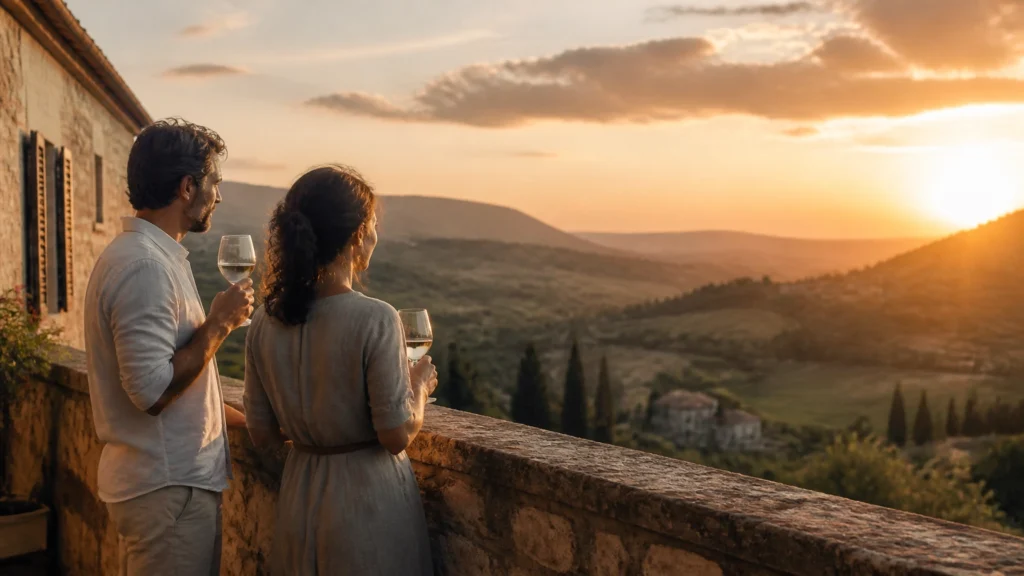
It’s the difference between snapping a photo of Santorini at sunset and then rushing to your dinner reservation, versus sitting on a stone wall for two hours, watching the light change on the water, and realizing you haven't checked your phone once.
Phase 1: The Dream – Escaping the Performance Pressure

Most of us travel because we’re burnt out. We’re working 50-hour weeks, managing households, and navigating the relentless noise of digital life. We dream of freedom. But then, we accidentally pack that same "hustle culture" into our suitcases.
Imagine a different version of your next trip.
You wake up without an alarm. You walk down to the same café you went to yesterday. The barista recognizes you. You spend three hours reading a book or just watching the world go by. You don’t have a "must-see" list for today. Maybe you’ll wander toward the market, or maybe you’ll just take a nap because your body actually needs it.
Slow travel is the antidote to "FOMO" (Fear Of Missing Out). It replaces it with "JOMO": the Joy Of Missing Out. When you decide you don't have to see everything, you finally give yourself permission to enjoy something.
Phase 2: The Decide – Choosing Your Nervous System Over the Checklist
Why are people making the switch? Because our nervous systems are fried. Constant movement: early flights, checking in and out of hotels, navigating new transit systems every 24 hours: keeps your body in a state of high alert. That’s not a vacation; that’s a logistics exercise.
Research shows that staying longer in fewer places significantly lowers stress and increases psychological well-being. By staying put, you allow your "rest-and-digest" mode to actually kick in. You’re not just seeing a new place; you’re letting that place change your internal tempo.
When you decide to slow travel, you’re deciding to value your peace over your social media feed. You’re deciding that a meaningful conversation with a local shopkeeper is worth more than a blurry photo of a crowded monument. If you're looking for a deeper reset, places like Bali offer the perfect environment to practice this kind of intentional stillness.
Phase 3: The Plan – How to Actually Do It (Without Getting Bored)

The biggest fear people have about slow travel is: "Won't I get bored?"
The answer is a resounding no. You won't be bored; you'll be immersed. But it does require a different kind of planning. Here’s how to transition from a "Sprint Traveler" to a "Slow Traveler."
1. The 3:1 Rule
If you have a week, stay in one place. If you have two weeks, maybe two. A good rule of thumb is the 3:1 Rule: spend at least three days in any single location before even thinking about moving. This gives you time to move past the tourist-traps and find the hidden gems that only reveal themselves once the day-trippers have left.
2. One "Anchor" Activity Per Day
Instead of a 10-item itinerary, choose one "Anchor." This could be a specific museum, a cooking class, or a hike. Do that one thing in the morning, and leave the entire afternoon completely blank. This allows room for the best part of travel: the unexpected.
3. Live Like a Local
Forget the big hotels on the main strip. Look for a guesthouse or an apartment in a residential neighborhood. Shop at the local market. Try to cook one meal using local ingredients. This shift from "consumer" to "participant" is where the magic happens. You’ll start to notice the rhythm of the city: the way the light hits the buildings at 4:00 PM, the sound of the neighbors’ morning greetings, the smell of the bakery down the street.
For more tips on how to strip the stress out of your logistics, check out our ultimate guide to stress-free planning.
Phase 4: The Act – Taking the First Slow Step

Making the jump to slow travel can feel risky. We’ve been conditioned to think that more is better: more cities, more photos, more "value" for our money. But real value isn't measured in mileage; it's measured in how much of yourself you find along the way.
Your first "act" doesn't have to be a month-long sabbatical in Tuscany. It can be a long weekend in a nearby town where you promise not to set a single alarm. It can be choosing the train over a budget flight so you can actually watch the landscape change.
Slow travel is a rebellion against the "busy" trap. It’s a way to reclaim your time and your curiosity. When you stop rushing, you start seeing. You notice the way a specific spice smells in a marketplace. You hear the cadence of a language you don’t speak. You feel the sun on your skin instead of just looking at it through a viewfinder.
The Lifestyle Shift: Beyond the Trip
The best part? The "Slow" mindset doesn't stay at the airport when you fly home. Once you learn how to slow down in a foreign city, you start to realize you can do it at home, too. You start to see the value in a slow morning, a quiet walk, and the beauty of an unplanned Sunday.
We work hard. We deserve more than just a change of scenery; we deserve a change of pace. Life should feel bigger than just work and stress. It should feel like a series of experiences that we actually have time to feel.

So, for your next escape, ask yourself: Do I want to see the world, or do I want to experience it?
The world isn't going anywhere. It’ll still be there if you don't see it all this time. But your peace of mind? That's worth stopping for.
Want to win a complimentary vacation? Check it out here: https://linkmate.one/Andre_Hardy